Log in to our new Customer Portal

24/7 access to your policy, documents and claims

News

DRIVING TIP: WATER CROSSINGS WHILE TOWING

There’s no doubt that water crossings are one of the most potentially hazardous obstacles encountered when out in the bush, and when you’re towing a camper behind you the risks can be multiplied so extra …

Image
Club 4X4 Insurance
Jun 12 2018

Jun 12 2018

Image

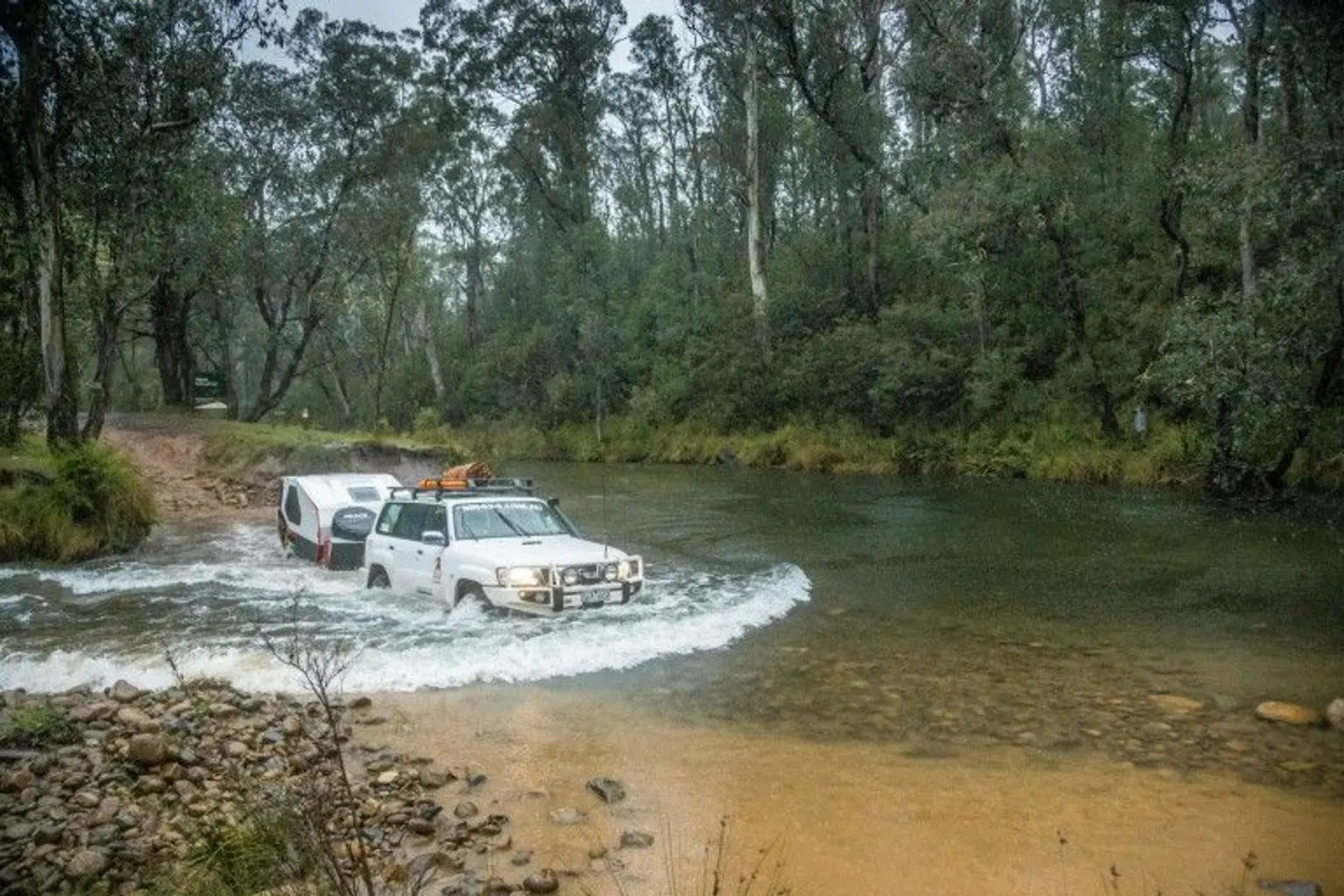
There’s no doubt that water crossings are one of the most potentially hazardous obstacles encountered when out in the bush, and when you’re towing a camper behind you the risks can be multiplied so extra care must be taken. Here are our tips for water crossings while towing.

The first step is to assess the depth, the direction of the current and how hard it’s flowing. A trailer can double your side-on profile which’ll give the water a lot more surface area to act against, so there’ll be more force trying to push you off your line. The other consideration is that in deep crossings trailers can actually be pretty buoyant and start to float. Combined with a strong current they can jack-knife and try to pull you off course.

It’s important to keep your tow vehicle moving at a steady pace in order to maintain the bow wave in front of your four-wheel drive. This will create a depression of shallower water behind it that you should aim to pull your trailer through, minimising the risk of its wheels leaving the ground.

As with any crossing, if it’s too deep or the current is too strong, try to find another way around, even if it adds a bit of time to your trip. It’s a bit trickier with trailers, as the option of trying to reverse out is either very difficult or impossible.

I’d take an extra couple of hours driving over losing thousands of dollars worth of gear…or sleeping on a soaked mattress for that matter.

Article from mr4x4
Image
Club 4X4 Insurance
Blog

Discover other stories

View all

Warm up with weekly articles aimed at adventure

Mount Buffalo, Vic High Country

Trips & Destinations

Snow Camping in the Victorian High Country

Most Australians spend winter trying to stay warm. Snow campers spend it deliberately sleeping in sub-zero temperatures. If you've ever wanted to experience the Victorian High Country under a blanket of snow, this guide covers everything you need to know, from road closures and sleeping systems to snow chains, camp setup and staying warm when the temperature drops.

Read more  

Most Australians spend winter trying to stay warm. Snow campers spend it deliberately sleeping in sub-zero temperatures. If you've ever wanted to experience the Victorian High Country under a blanket of snow, this guide covers everything you need to know, from road closures and sleeping systems to snow chains, camp setup and staying warm when the temperature drops.

A 4X4 Ford Range with a popped rooftop tent behind a campfire in the bush at night

Trips & Destinations

Is Victoria’s “Big Desert” Really a Desert?

Big Desert might not look like the deserts you're picturing, but beneath Victoria's mallee scrub lies some of the state's best sand driving. From remote campsites to surprisingly challenging tracks, here's what to expect before you go.

Read more  

Big Desert might not look like the deserts you're picturing, but beneath Victoria's mallee scrub lies some of the state's best sand driving. From remote campsites to surprisingly challenging tracks, here's what to expect before you go.

4x4 and caravan camping in Outback Queensland

Trips & Destinations

Is Winter Camping Better in Queensland?

Think winter means packing away the camping gear? Think again. From Cape York and Tropical North Queensland to Carnarvon Gorge, K'gari and the Outback, winter is one of the best times to explore Queensland. Cooler days, comfortable nights and endless camping opportunities make it the perfect season to hit the road.

Read more  

Think winter means packing away the camping gear? Think again. From Cape York and Tropical North Queensland to Carnarvon Gorge, K'gari and the Outback, winter is one of the best times to explore Queensland. Cooler days, comfortable nights and endless camping opportunities make it the perfect season to hit the road.

View all