Article from Mr 4×4.
Who’s got too much space? Who’s got heaps of payload left? Hmm, not many of you!
If you go 4×4 camping then you’ll often be taking a lot of gear, and before you know it, you’re out of space and out of payload. And the problem rapidly becomes worse as you add people; sure you don’t need four stoves for four people, but you need four chairs, four lots of food and so on.
Now if you’re a single traveller in a ute towing a trailer you probably don’t need to read any further – enjoy your hectares of space and you can feel smug about being so far under GVM. But for the rest of us, well, we’re fighting a battle of the bulge.
So at this point, you might expect my advice to be “take less stuff”, and to be fair, that is a good option. But I think that’s a very personal decision, so I’m not going to try and tell you what you should, and should not take on your trips. You want to take a 65-inch TV…not my business unless you run a generator such that my peace and quiet is unduly disturbed.
But what I am going to do is point out lighter, and less bulky alternatives to some of the basic gear. And by ‘basics’ I mean accommodation such as tents, sleeping gear, cooking. I’ve categorised 4×4 camping gear into five types as below:
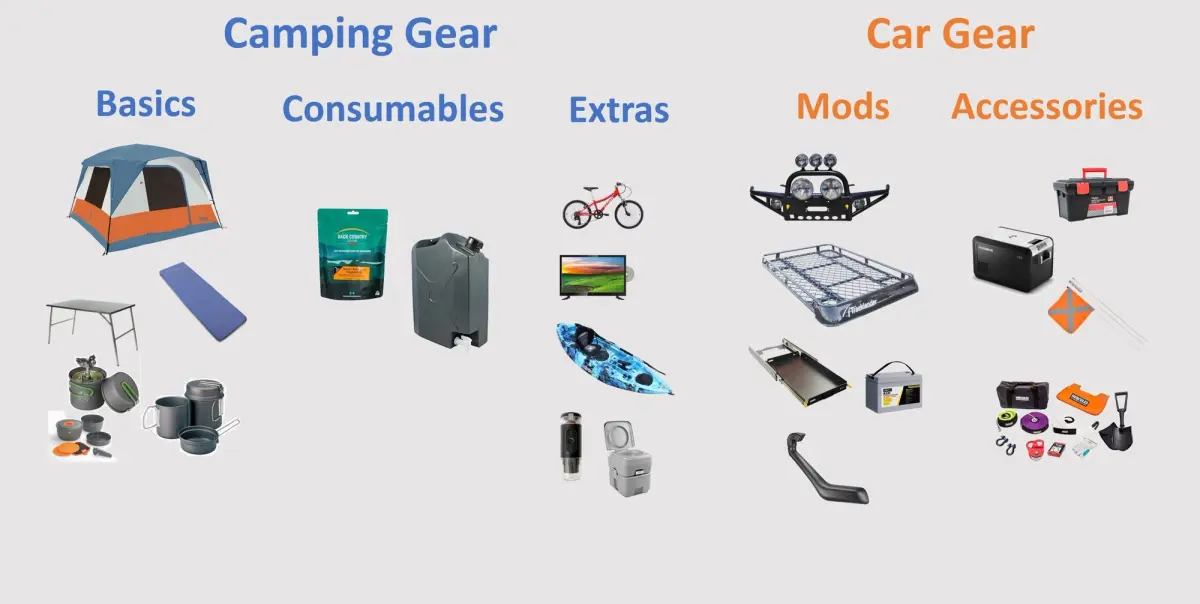
Everyone covers the basics so they can eat and sleep, and we all take a varying degree of extras specific to our interests; bikes, metal detectors, kayaks and yes I’ve put a toilet in there! Consumables are food and water, and then there’s the car gear; Modifications are permanent changes to the car, accessories are things you take with you.
I’m fairly unusual (some would say stop there) because I’m one of the few that camp out of a backpack, 4×4 and own a caravan. Quite a few hikers don’t even own a car, and many vanners consider a trip from car to cafe entrance quite enough of a hike, thank you very much.
So I looked at my hiking setup and noted my basics came in around 5kg. Yes, that’s right. My tent, stove, sleeping bag, mat, cutlery, and the pack itself…under 5kg. Then you add onto that your water, food and hike-specific gear which tops out for me at around 18kg. Here’s me, with everything I need for two days camping, carried on my back:
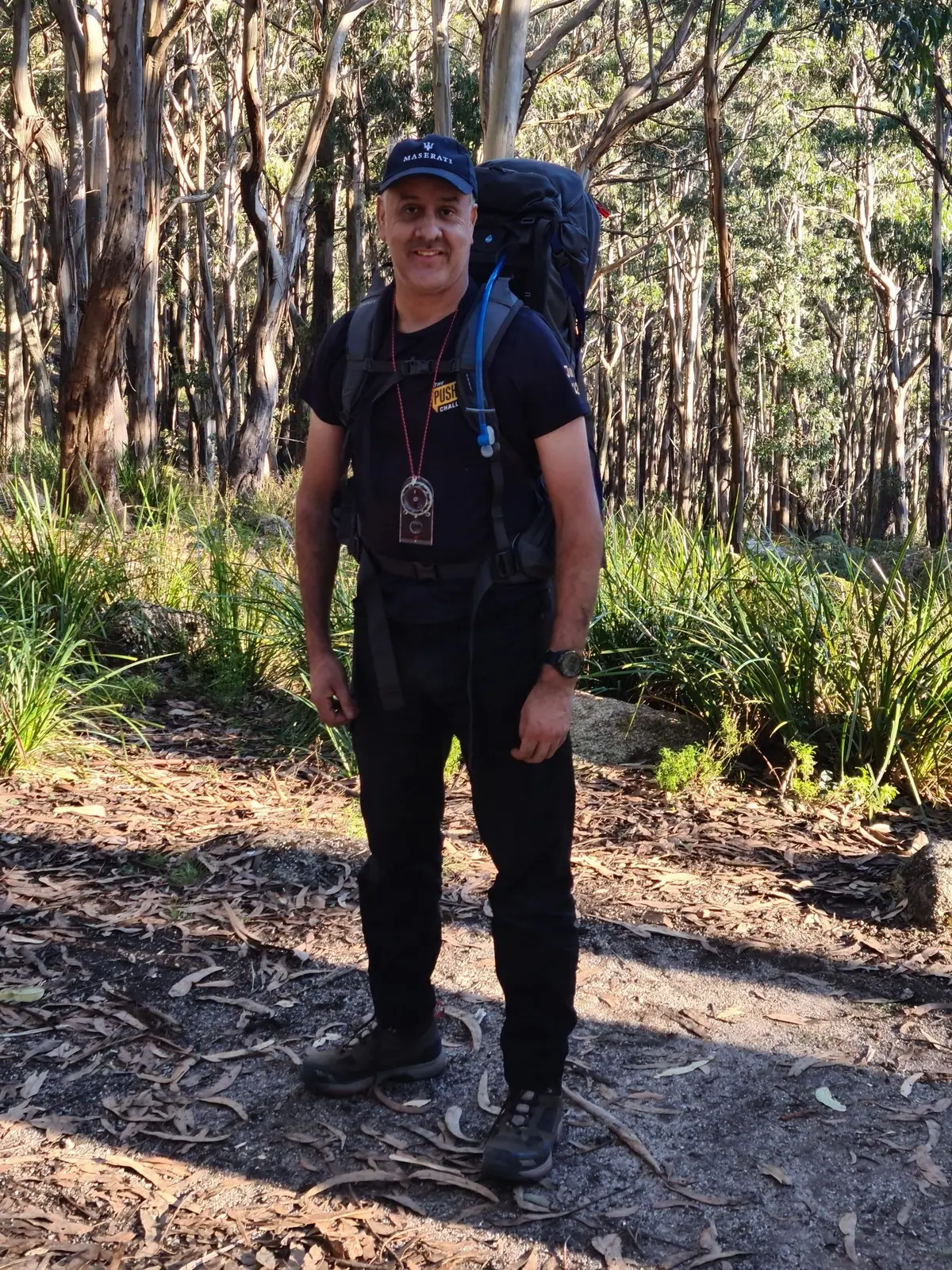
And that 5kg ‘dry weight’ is heavy by some standards! But imagine if 4×4 camping was that light..family of four, 100kg all up. No more worries about GVM or space!
Now of course there are drawbacks. Gear that is light and high quality will almost always cost more, quite a bit more than the heavy, bigger gear. Down sleeping bags are small and light, but nudge up towards $1000 for good ones compared to a cheapie synthetic for $100. And, it may not be as easy to use; my lightweight camp chair takes more setup time and isn’t as comfortable as bigger chairs. You may also wonder about a fridge. Well, I’m not carrying one at all, surprisingly enough, so of course, a 4×4 can carry more than a hiker. By the way, I’ve never in my life run a fridge slide as I hate the extra weight and bulk. I reckon fridges are a great way to save weight; compare the weight of a 65L fridge, drop slide, and AGM battery vs s 45L fridge, no slide and lithium battery. But again we’re into the tradeoff of weight vs function; I’m fit and 6 feet tall so I can reach into things. Another example is my hike stove which weighs around 70 grams, fits in a pocket and uses a tiny gas canister…compare that to 15kg worth of stove and a 9kg gas bottle which weighs around 18kg. A friend of mine uses her hike stove for coffee-making as it’s quicker than setting up her camper’s gas, and I can well see the point.
So I thought it’d be an interesting exercise to weigh all my Basics 4×4 camp gear, and then do the same for my hike gear to see how much weight and bulk could be saved. The short answer is – a lot! I calculated it at 80kg worth of gear for a single person, and 21kg if you go the lightweight route, and in the 21kg then I allowed quite a few luxuries such as wine glasses, dustpan, table and awning which you don’t take backpacking. For a family of four, the total weight saving was 110kg, quite a bit!
As I said, I’m not here to tell you what you should and should not take. Not my style at all. I am just saying that hiking gear offers a light and small alternative to what you’d normally take, albeit at a possible compromise of cost and usability. If you are struggling with space and payload, then I would suggest you take a look at the hiking gear as it may solve your problems. And if you want a step-by-step run-through of everything I found, then have a watch of my video below and let me know what you saved.